Insights · For developers
What a quarterly update film actually contains (a frame-by-frame walkthrough)
Three minutes. Four beats. Ten or twelve cuts. Every editorial choice in a quarterly update film is doing a specific job. This is the walkthrough of one episode of The Capston, frame by frame, with the reasoning.
By Sam Hendrick · published 14 May 2026 · 9 min read
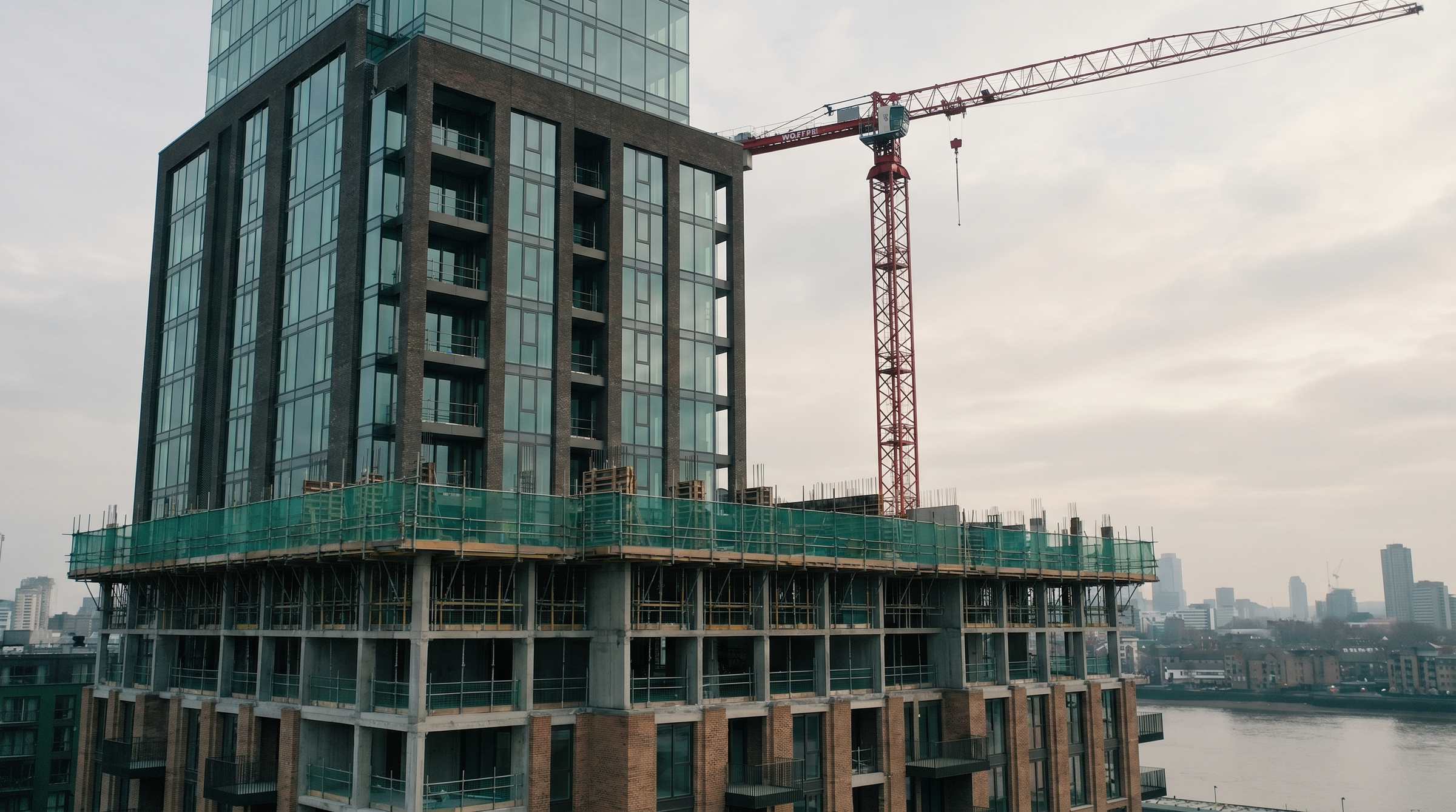
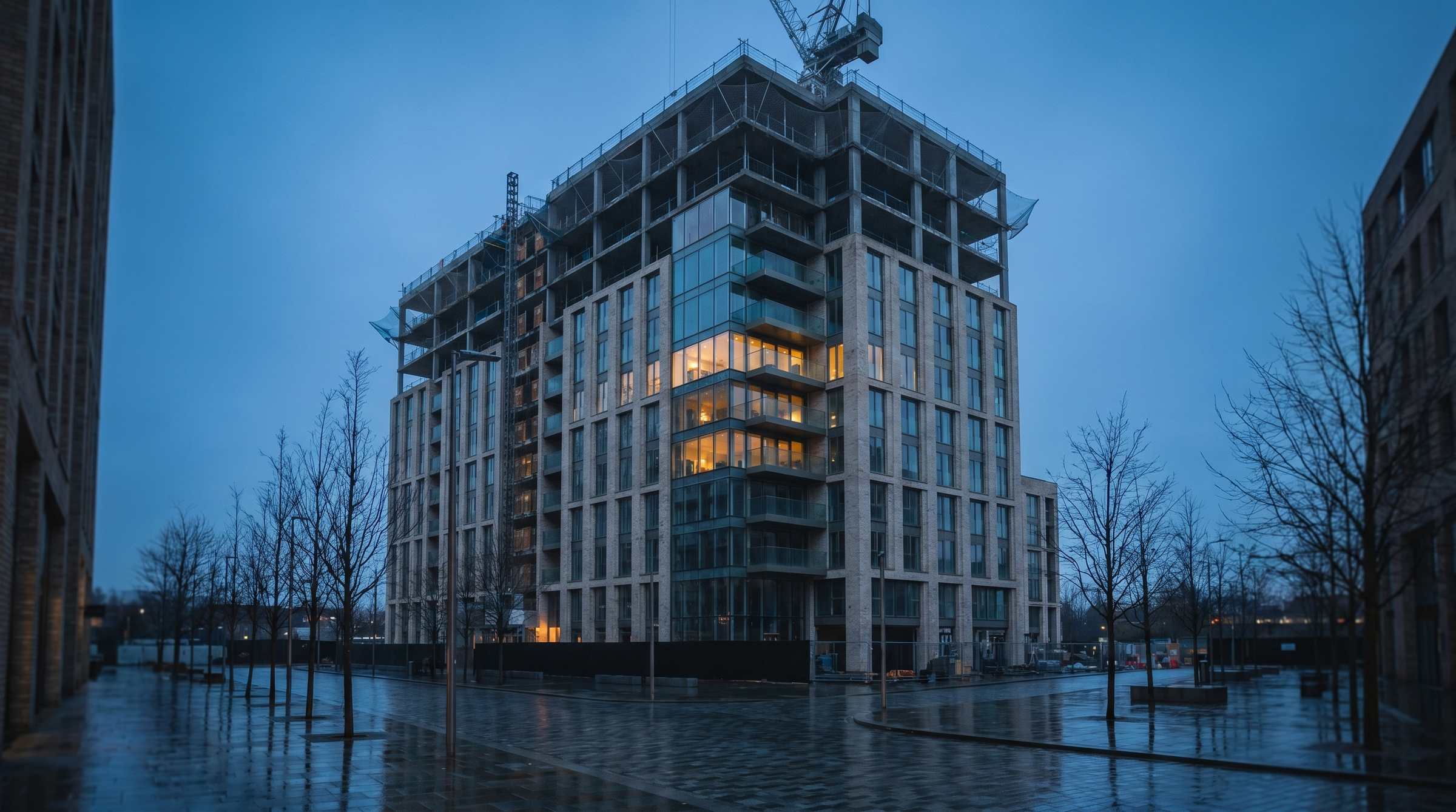
The episode walked through here is Episode 1 of The Capston quarterly buyer update programme, produced for Ballymore at Embassy Gardens. The case study sits at /work/ballymore-the-capston if you want the embedded film alongside this read.
The film runs three minutes. It contains four narrative beats and roughly twelve cuts. Each cut is doing a specific job. This is the walkthrough.
Why a frame walkthrough is the right format for this article
Most articles on construction marketing video stop at “make it polished and put a person on camera”. That is not enough to commission a film with confidence. The thing a developer needs to see, before signing a two-year programme, is the editorial discipline. The reasoning behind every cut. The ratio of aerial to ground. The position of the on-camera interviews. The role of the CGI overlay.
This is that walkthrough. Read it once, and the next time you watch a quarterly film you will see the structure underneath. That is the test of category vocabulary. You stop seeing “a video” and start seeing the assembly.
The four beats
Every episode follows the same four-beat structure. The structure is invariant. The content within each beat changes every quarter, with the build.
Beat 1. Aerial wide. Where the building sits. What it looks like today. Beat 2. The site team on camera. What was done in the quarter. What is happening this week. Beat 3. The CGI overlay. The render composited into the live site, oriented by floor and view. Beat 4. The look ahead. What the next quarter delivers. End on the building, not the team.
The structure is not arbitrary. It maps to the three things off-plan buyers actually want, in order of how the buyer’s mind moves through them. Where is my building. Who is building it. What is it going to look like and what comes next. The structure is the answer.
Episode 1, frame by frame
Cuts 1 to 3. The opener. Aerial wide, twenty seconds.
The film opens on a wide aerial of Embassy Gardens. South-bank Thames frame. The Capston is the building under construction in the middle distance. The shot is geographically anchored. The buyer can see the river, the US Embassy, the Linear Park, and the existing Embassy Gardens phases either side. Three short cuts inside the wide. The drone moves slowly. No music swell. No graphic title card on top of the moving aerial.
The reason. The buyer needs three seconds of geographical orientation before any other information lands. Most off-plan buyers have visited the site once, on the launch event. They do not carry a precise mental map of the wider Embassy Gardens neighbourhood. The opener gives them the map back. Once they have the map, they can absorb the next two minutes.
We use the same opening drone path every quarter. By Episode 8 the buyer has watched the same approach eight times. The repetition is the point. It compounds into a visual signature for the development.
Cut 4. The lower-third title. Two seconds.
A clean lower-third on a held aerial frame. “The Capston at Embassy Gardens. Quarterly Update. Q1 2026.” Anton font, white type. No graphic flourish. No motion design. A single two-second hold.
The reason. Buyers are forwarding this film to family, lawyers, investment partners. They land in the middle of the email and need to know within two seconds what they are watching. The lower-third does that. The restraint signals seriousness. A motion-graphics title sequence here would tip the film into “marketing video” register and lose the trust function entirely.
Cuts 5 to 7. The site manager on camera. Thirty seconds.
Cut to a tight head-and-shoulders of the site manager. He is on site, hi-vis, the build behind him out of focus in the frame. Two sentences. What was completed in the quarter. What is happening this week.
The reason. This is the single highest-trust cut in the entire film. Buyers seeing the actual person responsible for their building, on the actual site, explaining the actual progress, builds confidence that nothing else in the format can match. The cut is short. We do not let him deliver a speech. Two clean sentences, in plain English, then we move on.
The framing matters. Tight head-and-shoulders, build clearly visible behind. Not the boardroom in Canary Wharf. Not a stock photograph of a hard hat on a desk. The frame says “I am on the site. The site is real. I work here.”
Cuts 8 to 10. Ground b-roll inside the build. Twenty-five seconds.
Three short cuts of ground-level cinematography inside the active build. A welder. A formwork carpenter. A site engineer at a station setting out levels. Wide on the structural frame. Mid on the rebar going in. Tight on a hand reading a survey instrument.
The reason. The site manager has just told the buyer what is happening. The b-roll proves it. The cut sequence is hands and faces and material. People making the building. This is the section buyers send to their parents and their lawyers. The cut without people in it does not work as well as the cut with people in it. Construction, as a category, has been visually represented by empty drone shots and finished renders for too long. The work is done by people. The film should show them.
Cuts 11 to 13. Aerial transition into the CGI overlay. Forty seconds.
A second aerial pass. This time tighter. The drone closes from a wide of the Embassy Gardens corridor onto a specific elevation of The Capston. We hold the aerial for four seconds on the elevation where the buyer’s unit will sit. Then the CGI overlay fades up, composited frame-accurately into the live aerial. The architectural render of the finished building emerges from the live structural frame.
The reason. This is the unique value of the format. No other comms format does this. A render alone is the brochure image the buyer already has. A drone shot alone is a progress photograph. The composite is the answer to the third question. What is my unit going to look like, and where in the actual sky does it sit. The buyer sees, in one shot, the site as it is and the building as it will be. Their floor highlighted. Their view from that floor traced out into the city.
This cut is the centrepiece of every episode. The build behind compounds. The render in the foreground is the same. The two together tell the buyer that the brochure they bought from is the building that is being made, on the site they can see, from the floor they have committed to.
The technical work is non-trivial. The render is composited from Ballymore’s architectural files into the live 4K aerial, oriented to the same flight path captured on the previous quarter, lit to match the time of day of the live shot. We do this in post. The frame-accurate aerial flight protocol is what makes the composite line up. This is why the GPS-locked flight path is not a marketing claim. It is the technical prerequisite.
Cuts 14 to 15. Project director look-ahead. Twenty seconds.
Cut back to a second on-camera presence. The project director, this time, not the site manager. Same framing convention. Hi-vis, build behind, tight head-and-shoulders. Two sentences. What the next quarter delivers. The slab, the frame, the facade, the fit-out. Specific to the quarter.
The reason. Two on-camera voices is the right number. One voice and the film starts to feel reliant on a single person. Three voices and the cut becomes crowded. Two is the structure that keeps the film human without losing pace. The voices are also doing different jobs. The site manager is the past quarter. The project director is the next quarter. The buyer hears both.
The project director gets the look-ahead because their authority is forward. Buyers want the forward statement to come from someone whose job is the programme. Site managers are responsible for the week. Project directors are responsible for the year.
Cut 16. The closing aerial. Fifteen seconds.
End on a held aerial of the building. No music swell. The shot moves slowly upward, away from the elevation. The render fades down. We are back to the live build. The cut holds for four seconds with no movement. The screen fades to black.
The reason. End on the building, not on the team. The film is about the building. The team is the means. The closing frame is the buyer’s last visual of the quarter. It should be the structure, holding, becoming the next quarter’s starting frame.
Cut 17. The end card. Five seconds.
Black card. Wordmark. Single line of text. “The next update will land in three months.” No call to action. No social handles. No logo carousel. Five seconds of black and the wordmark, then end.
The reason. The film is correspondence with the buyer base. Correspondence does not end with a call to action. It ends with the courtesy of a sign-off. The end card is the developer signing the letter.
What is deliberately not in the film
A few things that get suggested for buyer films that we have learned to leave out.
A music swell at the climax. The CGI overlay is the climax. It does not need a swell underneath it. The image is the emotional moment. Music underneath competes for the same attention. We use a sparse ambient score throughout, even pace, no rises.
A voiceover narrator. The film has two voices. Both are the developer’s people, on site, in their own words. A third voice from a corporate narrator would dilute the trust function entirely.
Captions over silent footage. Captions are added for accessibility on the web version. The primary watch should be with sound on. Silent captioned films feel like cut-down social content. The format is a buyer letter, not a social asset.
Logos and credits. No logo crawl at the end. No “produced by” card. The film is the developer’s communication. Our credit sits in the case study, not the film.
Multiple developments. Each development gets its own film. Buyers care about their building, not the rest of the portfolio. Compressing two developments into one film halves the value to each buyer base.
What this looks like in practice
The walkthrough above is one episode. The structure repeats across the eight episodes of the programme. The aerial flight path stays the same. The on-camera framing stays the same. The two voices, depending on availability, are usually the same two people for the duration. The CGI overlay updates with the build.
The compounding is the point. By Episode 8, the buyer has watched the building emerge from groundwork to topping out across two years of consistent visual language. The eight films cut into a single sequence on completion become the time-lapse the developer keeps in the archive forever. The episode is the deliverable. The archive is the by-product that becomes the most valuable thing.
If you want to see the actual film walked through here, the Capston case study sits at /work/ballymore-the-capston. For a 20-minute call about a development you are running, book a call here or ring 0207 458 4997.